EN
EN




Challenges and Optimization of SMC Molding Technology
SMC (Sheet Molding Compound) molding technology involves applying pressure and heat to SMC materials through molds, enabling them to solidify or melt within the mold cavity to produce components that meet specified dimensional and performance requirements. As an efficient and high-precision thermosetting composite, SMC material is widely used for manufacturing complex structural parts with high strength and weather resistance. This technology achieves optimal balance among efficiency, performance, and cost-effectiveness, making it the mainstream manufacturing solution for automotive lightweighting, electrical insulation, and outdoor weather-resistant structural components.
Key points of SMC Molding Technology
Mold design: As the foundation of forming, it is essential to optimize the cavity structure, runner layout, and exhaust system in accordance with the product structure and dimensional accuracy requirements to prevent defects such as material deficiency and bubbles in the final product.
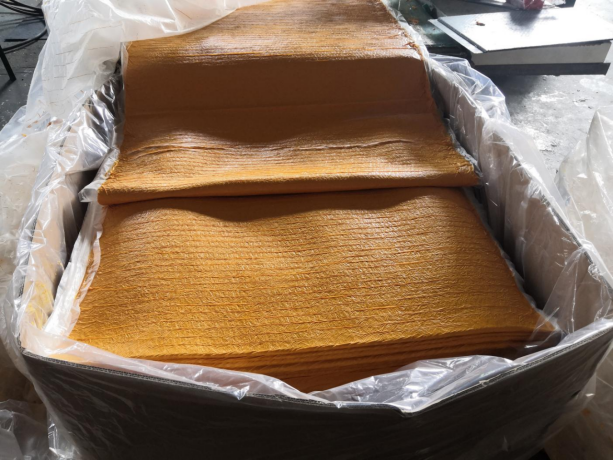
Material preparation: Raw materials such as moulding compounds and prepregs must be pre-treated to remove impurities, adjust moisture content and ensure material uniformity.
Pressure and Temperature Control: By precisely regulating molding pressure and temperature, the material is forced to flow and fill the mould cavity while promoting resin curing and solidification. The compatibility of temperature and pressure parameters directly affects finished product performance and molding consistency.
Advantages and limitations of SMC molding
The main advantages of SMC molding lie in its large-scale production capacity, streamlined process flow, and strong automation compatibility. This significantly reduces unit production costs while ensuring dimensional stability, superior surface quality, and uniform mechanical properties in molded products, making it ideal for standardized mass production. Additionally, the process demonstrates strong environmental friendliness with minimal pollutant emissions during manufacturing.
However, it has limitations. Due to the constraints of mold cavity structure, it is difficult to form irregularly shaped, deep-cavity, or structurally complex products. Additionally, mold disassembly is challenging, and the trimming processes are time-consuming. Furthermore, material flow during the forming process is significantly influenced by temperature and pressure parameters as well as mold structure, leading to issues such as uneven filling and requiring high precision in process control.
Challenges and Optimization of SMC Molding Technology
Insufficient material flow remains a critical challenge in mold pressing processes, particularly when forming complex structures or large-scale components. Materials often fail to fill mold cavities uniformly, leading to defects such as material shortages and fiber agglomeration that compromise both mechanical properties and surface quality. Optimization efforts primarily focus on material modification and process parameter alignment. By refining resin systems and adjusting fiber content and orientation, material flowability can be enhanced. Meanwhile, it should apply staged pressure and precise temperature control to ensure uniform material distribution and minimize forming defects.
Making a balance between mould precision and production efficiency presents another significant challenge. Optimisation must focus on upgrading mould design and machining processes. High-precision machining techniques should be adopted to improve the accuracy of mould cavities and surface quality, whilst simultaneously optimising mould structure by designing demountable and modular moulds to reduce disassembly and maintenance time. Furthermore, the introduction of mould wear monitoring technology will enable the timely identification and resolution of wear issues, thereby extending mould service life and achieving a dual improvement in both precision and efficiency.
RDS Composites manufactures SMC/DMC/BMC molded components in various configurations based on customer designs. Through rigorous material quality control and close process monitoring, our products feature accurate dimensions and robust mechanical properties. Please call us or send an email to [email protected] for further enquiry.